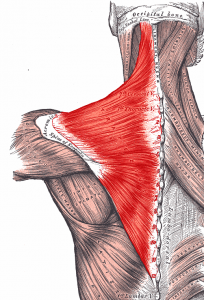
Anatomy of the Iliotibial (IT) Band

April 26th, 2013

Sports Massage Therapy entails a lot of specific work. There are hundreds of sports that athletes are determined to master. But at my practice in downtown Salt Lake City, Utah, I find that athletes whom are constantly training end up with many similar injuries. One of these common injured areas includes the Iliotibial band, or IT Band.

The Iliotibial band (IT band) is a long flat fibrous band that runs all the way down the outside of the thigh connecting the Tensor Fasciae Latae muscle to the anterior tibia just below the knee. The Tensor Fasciae Latae originates from the anterior part of the outer lip of the iliac crest and from the outer surface of the anterior superior iliac spine or ASIS.

The IT band is very long and therefore plays a big part in our everyday movement. Surrounding it are some major muscles like the Gluteals, Hamstrings and Quadriceps. The tasks of the Iliotibial Band (ITB) are flexion, abduction, and medial rotation of the hip. In addition, the ITB contributes to lateral knee stabilization. I’ve always found it fascinating how the Tensor Fasciae Latae kind of turns into the Iliotibial Band, therefore acting through the band by pulling it superiorly and anteriorly. This can also be seen in the illustration.

Hopefully you now have a better understanding of the IT band and its function. But this band often baffles clients. I constantly hear questions like, “Why does the IT band always get so tight” or “What type of tissue comprises the IT band?” This second question is another subject that fascinates me.

The IT band is a different type of tissue. It’s not muscle or tendon or ligament specifically, but instead a strong, tendinous fascia. Although Tendons, Ligaments and Fascia are all made up of connective tissue, they are all slightly different. I like to think of the IT band as a mixture of very strong Tendon and Fascia. This is how I try to describe it to my clients. Because the tissue of the IT band is so thick and strong, it is likely to become very tight, especially with much activity.

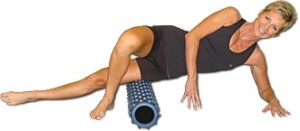
So which sports are mostly likely to affect your IT band? I see Runners and bikers that struggle the most with the IT band. If you are an avid walker, hiker, jogger or marathoner, I would suggest investing in a foam roller. Foam rollers are one of the most effective ways to loosen the IT band, because it is such a hard area to stretch. Below is a demonstration of how to use this foam roller on your IT band.
image

For some reason the woman in this photo has a big smile, but if you do this exercise, you won’t be smiling. It has always been a long running joke with many of my clients that the IT band always hurts because no one ever wants to stretch it out. Why is that? Because it can really hurt! But it will definitely feel better and looser after the fact, so don’t give up if you feel a little uncomfortable. You can find these foam rollers at your local Target or sports store, or just order one online.

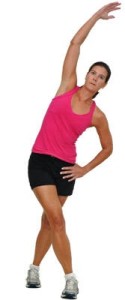
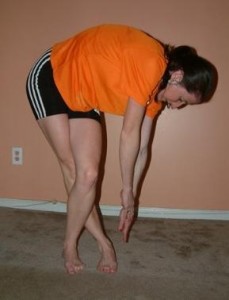
In my experience, however, it is not just runners and bikers who suffer from a tight IT band. It seems whether you are quite sedentary or a very active person, the IT band tends to become tense. The foam roller is a good option, but there are also stretches that can give some relief as well. Pictured below are 2 stretches that I use and recommend to my clients.
image
image

Make sure that you are really feeling the stretch on the outside of your thigh. It can be good to be in each stretch for 5 minutes or more, depending on how tight the IT band is.

And last but not least, of course massage is a huge benefit in relaxing the IT band. Several of my clients tell me that deep tissue bodywork is the only way that they feel relief in the IT band. Deep tissue is in fact very useful in lengthening the tissue. I usually will use what I like to call “The IT Sweep,” in which I have the client lie on their side. I then have them take the leg that is on top and flex it up and over the bottom leg, which exposes the hip of the leg on top. I proceed to take my elbow, and starting at the head of the femur, I “sweep” down the IT band all the way to the lateral side of the knee. This can be done 3-4 times to ensure the lengthening of that tissue. And honestly, it can be painful, just as the foam roller can be. But it works, and it works well.

After the IT sweep, I like to stretch the area. As mentioned before, it can be very difficult to stretch the IT band. But with assisted stretching from a licensed massage therapist or physical therapist, a deeper stretch can be achieved.

If you have concerns about your IT Band and want to hear more about treatment for it, please call me at 801-349-3934. I practice in downtown Salt Lake City, Utah and am always taking new clients. Call today to schedule your first appointment 🙂

Rejuvenate Your Cardiovascular System with Massage

March 7th, 2013

If you’ve ever considered the complexity of the human body and how it works, you realize that the body is not just made up of blood, bones and muscle. I have been a bodyworker in Salt Lake City, Utah for over 4 years and I still am surprised at the fundamental intracacies of our human make-up. Our bodies are actually comprised of 12 different systems that allow us to operate as 1 functional unit.

Each system has an important and specific duty to perform that keeps us alive. The 12 systems include:

1. Muscular System
2. Cardiovascular/Circulatory System
3. Digestive System
4. Integumentary System
5. Endocrine System
6. Urinary System
7. Reproductive System
8. Lymphatic System
9. Immune System
10. Respiratory System
11. Nervous System
12. Skeletal System

Massage therapy influences and benefits every one of these systems. It would be difficult to determine which system is improved most by bodywork, but one system that highly profits is the Cardiovascular/Circulatory System.

Our Cardiovascular structure is an organ system that encompasses our blood, our heart and the blood vessels of the body. The cardiovascular system carries blood, oxygen, and nutrients to organs and tissues of the body, and carries waste and carbon dioxide from these tissues for removal from the body. This system may be seen strictly as a blood distribution network, but it also helps fight diseases and helps stabilize body temperature and pH to maintain homeostasis.

The heart functions as a pump to move blood through the blood vessels of the body. The Cardiovascular system is essential for large, multi-cellular organisms, such as humans and animals. One of this systems’ biggest responsibilities is to supply oxygen to each and every cell of the body. Once oxygen is transported to the cells, carbon dioxide is then removed as it is absorbed into the blood. A second critical function of this system is to feed all of our cells with nutrients and energy via the bloodstream. The cardiovascular system also transports hormones to wherever they must be delivered in the body.

So what benefits does massage therapy contribute to the Cardiovascualar/ Circulatory System? Basically, massage can help to speed up blood flow by mechanically assisting the venous flow. This, in turn, improves the overall circulation through out our bodies.

According to the Associated Bodywork & Massage Professionals, massage therapy can help improve blood flow to the tissues, muscles and vital organs; and increased blood flow is a key element of good health.

Other advantages provided by massage therapy to the cardiovascular system are:
- Dilated blood vessels helping them to work more efficiently, and decrease high blood pressure
- Hastened removal of waste products, like toxins and carbon dioxide
- Prevents muscle cramping due to sustained blood flow
- Increases white blood cell count, helping to prevent disease
- Reduces Lymphedema
- Reduces Ischemia, which is a reduction in the flow of blood to body parts, often marked by pain and tissue dysfunction
- Helps to preserve brain tissue, cognitive function and protect against strokes.

So perhaps you do not experience muscle pain or tightness. But if you suffer from high blood pressure, poor circulation, low-immune quality or have a family history of strokes, massage could be an excellent method of prevention for you. Give me a call today in Salt Lake City, Utah at 801-349-3934. Find out if massage could benefit you and your cardiovascular system.

Plantar Fasciitis: Heal Your Heel Pain

October 21st, 2012

Plantar Fasciitis (say “PLAN-ter fash-ee-EYE-tus”) is not a very well-known term, but is a very common foot dysfunction that typically manifests itself as heel pain. In my practice, located in downtown Salt Lake City Utah, I have treated this more than any other foot disorder. It seems to be most common in middle-aged people. However, it is also very common among young people who are on their feet a lot; namely, athletes and people who work in food or construction professions. Many people suffer with this condition and don’t even know it. They may just attribute their sore feet to the fact that they are on their feet all day and perhaps think there is nothing that can be done. But there is relief from the sometimes very intense pain of Plantar Fasciitis.

So how does this foot dysfunction affect the foot? It is a pretty simple concept. Basically, the plantar fascia is the flat band of tissue (ligament) that connects your heel bone to your toes. It supports the arch of your foot. If you strain your plantar fascia, it gets weak, swollen, and irritated. Furthermore, this tissue can develop micro-tears and becomes very inflamed. The inflammation is the bodies’ way of trying to protect the injured area. Then your heel or the bottom of your foot hurts when you stand or walk. Below, is an illustration of this ligament.

The pain and symptoms are usually very typical in each case that I have seen, which makes it easier for me to figure out what the problem is and how to treat it. My clients with Plantar Fasciitis will complain of heel pain mostly. Usually, the heel pain will be worse at night, which makes sense because they have often been on their feet all day. Complaints also include pain in the morning, more specifically tightness in the heel and Achilles Tendon. People report that when they take their first step out of bed in the morning, it takes 5-10 minutes before they can walk. The tightness can be so intense that is prevents them from putting pressure on their feet whatsoever.

Anatomically, if the heel is very tight, it also makes the Achilles Tendon tight which prevents efficient range of motion in the ankle. This is what makes it hard to walk in the morning. As I’ve mentioned many times in my previous blogs, the human body is an amazing machine that works as one functional unit. When one part of the body becomes tight, it affects the corresponding muscles, and so on. That is why it’s important to take care of imbalances and muscles that are not functioning correctly, as soon as possible.

Because these symptoms seem to be very much the same in all of my clients who suffer from Plantar Fasciitis, I have developed a useful protocol to heal this area of the foot, which includes stripping the Achilles Tendon first. Then I proceed to work the Plantar Fascia itself. Below, the picture shows how the Achilles Tendon is very much connected to, and affected by, to the Plantar Fascia.

But more important than the bodywork that I offer for Plantar Fasciitis, are the steps that YOU can take to heal your feet of this pain. Because of the inflammation associated with this dysfunction, ice is always important. I recommend to my clients, icing the feet for 15-20 minutes each night after being on their feet all day. And the most important remedy that I can suggest, simply is rest. The micro-tears and inflammation that occur with Plantar Fasciitis are a sign that you are on your feet much more than you should be. So, for example, say that you are a server that is on your feet for the majority of your shift serving food to customers. When you come home from work, ice your feet and try to stay off of them for the rest of the evening. This can be inconvenient for some, but also totally necessary.

If you or anyone you know, suffers from this type of pain, please take the steps to start healing your feet. Plantar Fasciitis can worsen very quickly, and eventually make walking very painful. This can detrimentally affect your quality of life. If you are in Salt Lake City, Utah, and you need a treatment to heal your pain and prevent further damage, call me today. I can be reached at 801.349.3934 and am taking appointments Monday - Saturday. Call today to start the healing process.

Common Sports Injuries

September 27th, 2012

Think of all the injuries that have occurred to your body in your lifetime. Depending on your level of activity, injury can be a constant part of some people’s lives. This especially can be the case for those who train competitively, whether it be solo or with a team. Athletes are consistently training and testing their bodies’ limits. For those who don’t compete, and perhaps like to hit the gym or a class a few times a week do not have the training pressure as that of an athlete. For example, if you are lifting weights at the gym and pull a muscle, you would most likely take a week or 2 off from your work-outs, allowing the injured muscle to heal. Athletes do not always have the option to do that. Sometimes they acquire an injury but must train through it. Repetitive work-outs can be detrimental to any given muscle. Basically, this repetition, without proper rest, is what leaves athletes most prone to injury.

The following injuries are some of the most common to athletes that I see here in Salt Lake City, Utah. Of course, different sports and events have their own specific injuries that occur, but I have accumulated some general injuries that I see in many athletes that come to me for bodywork.

1. Muscle Pull/Strain - Muscle Pulls and Strains are what I see most commonly in athletes. This can occur from over-training or simply not stretching enough. Very often I find that athletes train so much, they do not like to bother with stretching. But this seems to be true for most people in general as well. If you have a tight muscle in your neck or back, its obvious that 10-15 minutes of stretching would most likely alleviate the tension. However, I have observed that people, more often that not, will bypass the stretching. But I cannot stress enough, how important stretching is, especially for those that are very active. Another interesting observation that I have made, is that muscles can often become injured simply from stretching before work-outs. Stretching before a work-out does not seem necessary, since the muscles can be very cold still. Wait until the muscles have warmed up, and do your stretching after each work-out session.

What muscles become pulled/strained most frequently? From what I see in my clients, the Hamstrings and Piriformis are their biggest complaints. To avoid these pulls, of course make sure to stretch the Hamstrings and Glutes well after each work-out. But also make sure you are using your body mechanics the right way. Tighten your core and stand up straight as to maintain optimum posture and get the most out of your training.

2. Knee Pain - Knee pain in incredibly common to all athletes, but especially in runners. Repetitive pounding of your feet on the pavement or treadmill simply is not good for your knees. The most common knee pain, known as patellar-femoral syndrome, is an inflammation on the underside of the kneecap (patella). This can cause a lot of discomfort and make your work-outs very unpleasant. I also see this syndrome commonly occur in bikers and skiers. The best way to avoid these injuries is to make sure you have a proper gait during the activity, wear good shoes, and intermittently cross train to strengthen the muscles and ligaments around the knee.

3. Shin Splints - Shin splints are very common for athletes. I see these occur mostly in runners and dancers. They can develop from training on a new surface or changing the intensity of your work-out. They can cause a dull ache on the surface of the shins during or after work-outs, and can be quite painful. This pain is just caused from inflammation of the tissue in the area and usually can be cleared up with a little bit of rest and icing the area daily.

4. Tendonitis - is very common but can cause significant pain. It literally means inflammation of the tendon. If the normal smooth gliding motion of any given tendon is impaired, the tendon will become inflamed and movement will become painful. In my experience, Tendonitis seems to be most prevalent in the arms; especially the wrists and elbows. Another common spot is in the Achilles Tendon. An Achilles injury must be properly cared for and rested because this tendon is known to rupture. Recovery from a ruptured Achilles tendon can be a waiting game. You just won’t know how long it might take and limits your mobility drastically. Tendonitis occurs often from having a poor blood supply to the area, which prevents proper recovery from work-outs, but mostly it occurs from over-use. In cases of any type of inflammation, massage can help, especially to bring blood to the surface to heal the dysfunction must faster. But I have found that massage therapy can often make inflammation worse as well, so you just have to see how your tendonitis responds to bodywork. Of course, ice and rest always improve the injury as well.

5. IT Band Friction - The iliotibial (IT) band is a tough group of fibers that run along the outside of the thigh. It functions primarily as a stabilizer during running and can become irritated from overuse. Below is an illustration of the IT Band and its location. It is an interesting type of tissue because it is not specifically tendon, nor muscle, but can become pulled so tight that it causes much discomfort. I hear complaints of tension in this area from most of my clients who are active. The IT Band easily becomes tense but because of its specific type of strong fibers, it can be hard to stretch. A Sports massage treatment is most times always very helpful as the therapist will stretch this area for you. Also, you can buy foam rollers to roll out the tension. You just lie horizontally on the floor with the foam roller between you and the carpet, and move slowly to roll it out.

6. Tennis elbow- Also known as Lateral epicondylitis. This condition is basically just inflammation specifically in the elbow. Above, I mentioned that arms tend to suffer the most from tendonitis, but the most detrimental is when it affects the elbows. This can cause a lot of pain and discomfort and prevent normal activity severely. While the common name “tennis elbow” suggests a link to tennis and racquet sports, this condition can also be caused by sports such as swimming and climbing, the work of manual workers and waiters. And once again, because this is an inflammation issue, it is most commonly caused by over-use.

7. ACL injuries/tears - The ACL, or anterior cruciate ligament, is one of the most common ligaments damaged in a knee injury. ACL injuries are common among athletes participating in sports that require them to suddenly stop during a run or quickly change direction to avoid an opponent. I see this most commonly in football and basketball players. This injury, similar in severity to an Achilles Rupture, often requires surgery and many months of physical therapy. Bodywork can help this injury once its on its way to recovery and the inflammation has gone down. Massage Therapy can help to break up scar tissue and bring blood to the surface.

8. Plantar Fasciitis - Plantar fasciitis is a painful inflammatory process of the plantar fascia, the connective tissue of the sole (bottom surface) of the foot. Again it is caused by overuse, but how do you not overuse your feet?? It is a very common condition and I see it mostly affect people who wait tables for a living and runners. Because it is so common however, it can affect anyone who is on their feet a lot. Massage therapy can be a huge relief for those suffering from Plantar Fasciitis. Symptoms include, tightness in the feet, burning pain, and the inability to walk on your feet for the first few moments from when you get out of bed in the morning. People with this issue tend to complain of pain mostly in the evenings when inflammation is at its peak. Icing your feet for 20 minutes each night can cut down the pain significantly and staying off your feet as much as possible.

Although I have named a few common sports injuries, athletes are affected by many. But as you can see, most of them involve some type of inflammation to a certain tissue in the body and come on by over-use. If you are experiencing any of these conditions or know that you have an area of inflammation, try to back off from intense activity. It is your body giving you a signal to slow down. But you don’t have to slow down forever. Give your body 2-3 weeks of rest and then reassess the injury. And remember that it is much better to be out of the game for a few weeks, than it is to re-injure the area and really cause some problems. Also, I don’t want to sound like a broken record but ice will be your best friend through out this process. If you feel that you need more assistance, contact me in Salt Lake City, Utah today. Muscles that are being constantly abused can greatly benefit from massage therapy. Call today at 801.349.3934 to get more information about Sports massage and its benefits.

Pectorals Vs. Rhomboids: Tug of War Between 2 Muscle Groups

June 7th, 2012

Have you ever taken the time to observe the way people move? As a massage therapist, I am constantly watching how people walk, sit and stand. This includes an examination of postural distortions and one’s gait (the pattern of movement of the limbs.) Over time, I have discovered a very common condition that is affecting most people that I see. It seems as though humans are actually evolving backwards in this day and age. Although I may be half-joking with the previous statement, there is much truth in it.

Modern humans evolved from the last common ancestor of the Hominini some 2.3-2.4 million years ago in Africa. This species came from the genus Homo, which was preceded by primates such as gorillas and chimpanzees. So its safe to say that we evolved from such mammals. But have you ever seen the way a gorilla or chimpanzee sits or walks?

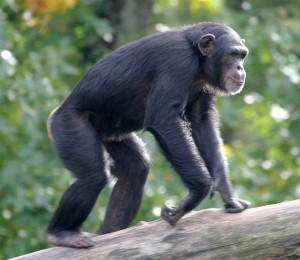
The illustrations to the left show a gorilla sitting down, and a chimp walking up a tree limb. I see an exaggerated mimic of bad human posture. Of course, you must keep in consideration that these animals do not typically walk upright like humans do, but I see some similarities between these monkeys and today’s human species.

Notice how the gorilla has his shoulders completely rolled forward and the chimpanzee is completely hunched over with his head and neck forward and down. This may seem like a silly analogy but just look at the illustration below.

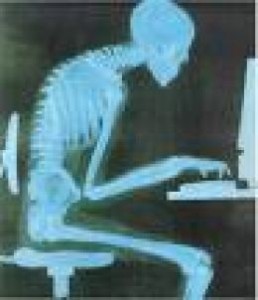
This posture is very commonly seen today, and wouldn’t you say it resembles the pictures above? Many people are not very observant of their own posture, which can be dangerous for our skeletal structures and muscles.

Because humans are an upright animal who walks on 2 legs instead of 4, it is ideal to have an upright posture. When posture is not upright, we start to experience all kinds of dysfunction in the body.

For now, let’s focus on a dysfunction of the shoulder girdle that occurs when our structure starts to look like the photo to the left.

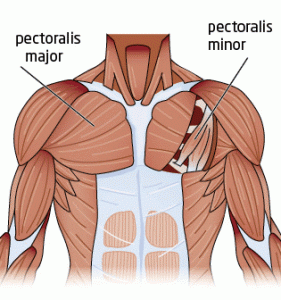
This common dysfunction in the body occurs between the Pectoral muscles and the Rhomboid muscles. The Pectoral muscles consist of the Pectoralis Major and Pectoralis Minor and they lie on the front of the chest.

The Pectoralis Major attaches at the anterior surface (front side) of the clavicle, and the anterior surface of the sternum. It inserts at the lateral side (outer side) of the humerus.

The Pectoralis Minor (pictured to the left) is a thin, triangular muscle, situated at the upper part of the chest, beneath the Pectoralis Major.

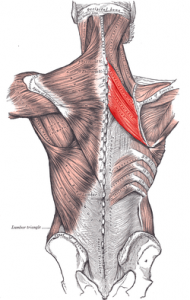
The Pectoralis Major/Minor are the major muscles of the anterior chest. Now lets talk about the opposite muscles (antagonistic) muscles to the Pectoralis muscles. The antagonistic muscles perform the opposite action of any given muscle, and the opposite of the Pectoralis muscles are the Rhomboids and Trapezius muscles. Below is an illustration of these.

The Rhomboids (left) consist of a major and a minor just like the Pectoralis muscle. The major arises from the thoracic vertabrae (mid-spine), and inserts on the medial border of the scapula. It also lies deep to the Trapezius muscle that is pictured to the right of the Rhomboids. The Rhomboid minor sits superior (above) to the Rhomboid major.

The Trapezius muscle, as you can see, is much larger than the Rhomboids and is wing-shaped. This muscle is unique in that it attaches where the base of the skull meets the neck, called the Occiput. and ends all the way down by the Lumbar spine. Also, this muscle, being as large as it is, has 4 separate heads.

So what exactly is this tug-of-war that occurs between the anterior and posterior muscles? The Pectoral muscles are much stronger and larger than the Rhomboids and Trapezius muscles, and consequently, in this tug-of-war, the Pectorals beat out the back muscles. One of the most common postural distortions is when people roll their shoulders forward shown in the blue illustration above. This causes the back muscles to become overstretched and the chest muscles to become locked short.

When this dysfunction occurs, it is common for people to feel pain in their shoulders and neck. And many massage therapists will overwork the back area to try to loosen up the muscles. But if they were to observe the Pectoral muscles, they would notice that this is where the tightness is actually occurring. Why would you need to perform deep tissue massage on the back muscles when they are already overstretched? The work must be done on the Pectoralis muscles in the chest.

Massage therapy is a great remedy for this imbalance in the body, but there are also many exercises that you can do to help strengthen your back muscles. For the Rhomboids, try pushing your shoulders back, imagining that you are squeezing your shoulder blades together. Also, you can extend your arm out away from your body at a 90 degree angle and perform arm circles, moving forwards for a few minutes, then backwards. For the Trapezius muscles, shoulder shrugs with weights are a great way to strengthen the shoulders. And to help with the shortened Pectoralis muscles, stand in a doorway with your arm over your head, holding onto the door frame, and lean forward. This stretches out these muscles that are constantly in a locked state.

If you or anyone you know are experiencing back and neck pain/stiffness, please give me a call today in Salt Lake City, Utah at 801.349.3934 to schedule your first appointment. As mentioned earlier, massage therapy is a great way to heal and prevent the tug-of-war that is constantly going on in your shoulder girdle.